
There is a stubborn instinct in industrial buying that says the cheaper option must be the worse one. Spend more, get more, sleep better. With steel partitioning, that instinct quietly costs a lot of businesses money, because it pushes them to pay for a specification they will never use. The cheaper choice is often not a compromise at all. It is simply the right tool for the job.
This guide looks at the steel partitioning cost question from that angle. Rather than another feature by feature comparison, which we already cover in our post on single skin vs double skin steel partitions, this is about value. What actually drives the price of a partition, why single skin usually costs less, and how to tell when that lower cost is exactly what you should be paying and when it is worth spending more. Get that judgement right and you end up with a partition that does its job without a penny wasted.
Cheaper is not the same as cheap
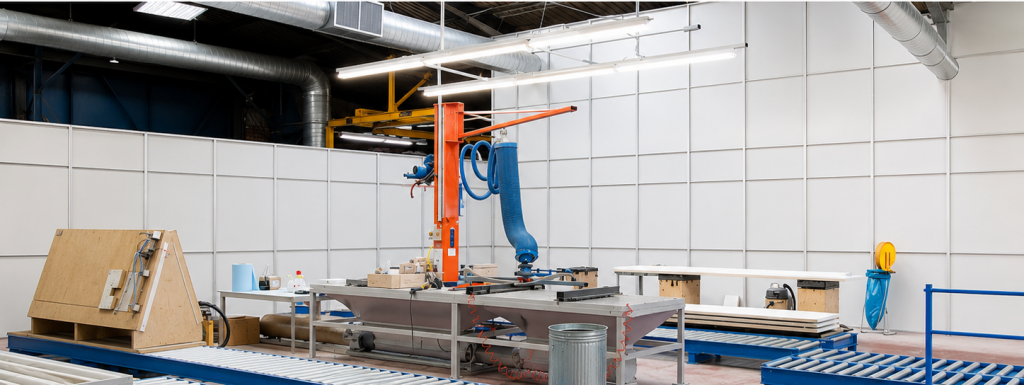
The first thing to separate is price and quality, because they are not the same conversation. A single skin steel partition is not a low quality product. It is a robust, powder coated steel system built for demanding industrial environments. It costs less than a double skin equivalent for one simple reason: it uses less material and less labour, not because it is somehow lesser.
Double skin systems add a second steel face over the framework, which improves appearance, thermal performance and sound reduction. That extra skin, and the work to fit it, is what you are paying for. If your space genuinely benefits from those things, the money is well spent. If it does not, you are buying a feature that sits there doing nothing while you look at a bigger invoice. So the real question is never which is better in the abstract. It is which is better for this space, this use and this budget.
What actually drives the cost of steel partitioning
Before you can judge whether single skin is enough, it helps to understand what moves the price of any steel partition up or down. The headline choice between single and double skin is only one factor among several, and often not the biggest.
The size of the job is the obvious one. Cost scales with the area of partitioning and, importantly, with height. A partition that runs to the underside of a high warehouse roof needs more material and more structural consideration than a low divide, so ceiling height matters as much as floor length. The specification of the panels comes next, which is where the single or double skin decision sits, along with any insulation for thermal or acoustic performance.
Then come the openings and extras, which add up faster than people expect. Personnel doors, sliding doors, roller shutters, vision panels, glazed sections and windows all cost more than a plain run of panel. Security mesh, a walkable roof section, a sealed and temperature controlled area, an airlock or a fire rated specification each carry their own premium because they each do a specific job. Finally there is the practical side: site access, how straightforward the installation is, and whether the system is demountable so it can be moved or reconfigured later. A demountable system may cost a little more up front but can be relocated rather than scrapped, which changes the whole value equation over time.
The point of listing these is not to alarm you but to show where the money really goes. Once you see the drivers, it becomes obvious that specifying carefully, rather than simply reaching for the dearest option, is how you control the total.
Why single skin costs less, and what you trade
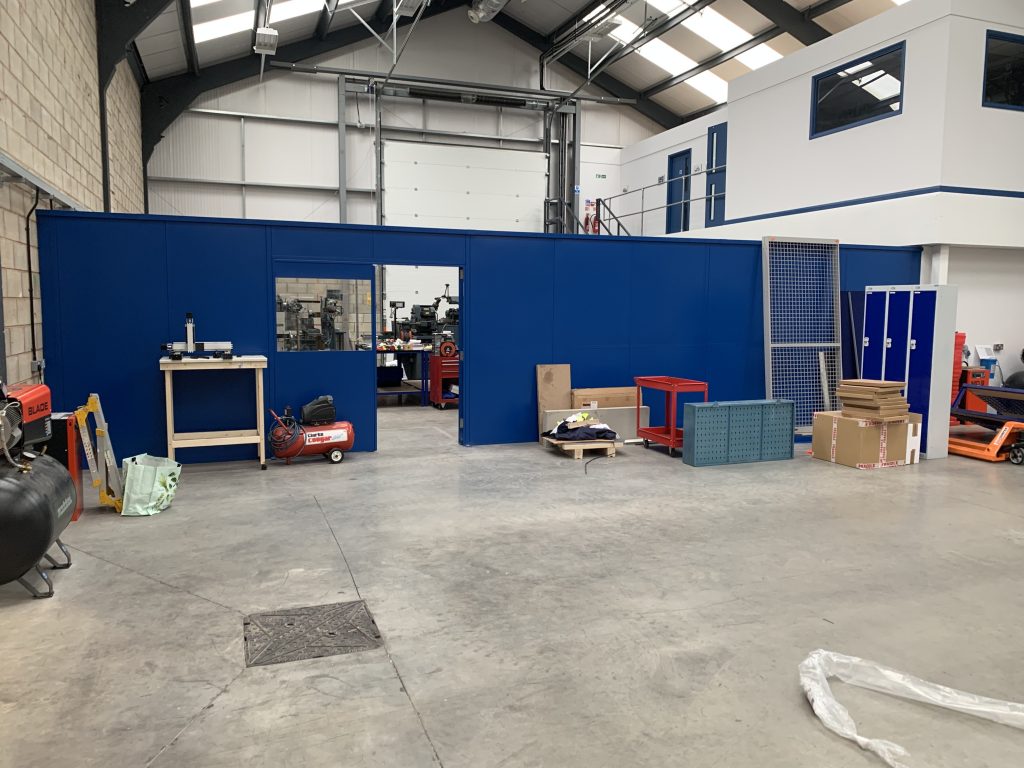
Single skin partitioning gives you a full steel framework clad on one side, powder coated and built to the same structural standards you would expect from any industrial system. What you are not paying for is the second steel skin and the finishing that goes with it.
In practice that means the frame is visible from one side, thermal insulation is limited, and sound reduction is modest compared with a fully clad double skin wall. For a huge range of industrial uses, none of those things matter in the slightest. A partition dividing a warehouse, enclosing a plant area or caging off secure storage does not need to look like an office wall or hold heat. It needs to be strong, durable and correctly installed, which is exactly what single skin delivers at a lower cost. If you want the full detail on the product itself, our single skin steel partitioning page sets out the specification, and the double skin partitions page does the same for the higher specification option.
When single skin is the right choice, not a compromise
For most functional, working industrial spaces, single skin is not the budget fallback. It is the correct specification. The trick is recognising when your space falls into that category, and a surprising amount of the time it does.
Think about how the space is used rather than how it looks. If the partition is dividing areas within a warehouse, separating a workshop from a storage zone, forming a secure cage, enclosing machinery or marking off a goods area, then thermal performance, acoustics and a polished finish are simply not on the requirement list. The wall needs to be strong, safe and durable, and it needs to go up efficiently. In those settings the second skin adds cost without adding anything you will benefit from. The same logic applies to plant enclosures, stores, cycle and equipment compounds, and the countless internal divisions that keep a busy site organised. Our guide to warehouse partitioning ideas shows just how many of these functional divisions a typical operation needs, and for dedicated working areas our workshop partitions page covers the same ground.
Choosing single skin for spaces like these is not cutting a corner. It is refusing to pay for a corner you do not need cutting. That is a very different thing, and it is where a lot of well run projects quietly save money.
When it genuinely pays to spend more
Being honest about value cuts both ways. There are clear situations where reaching for the cheaper option would be a false economy, and knowing them is just as important as knowing when single skin is fine.
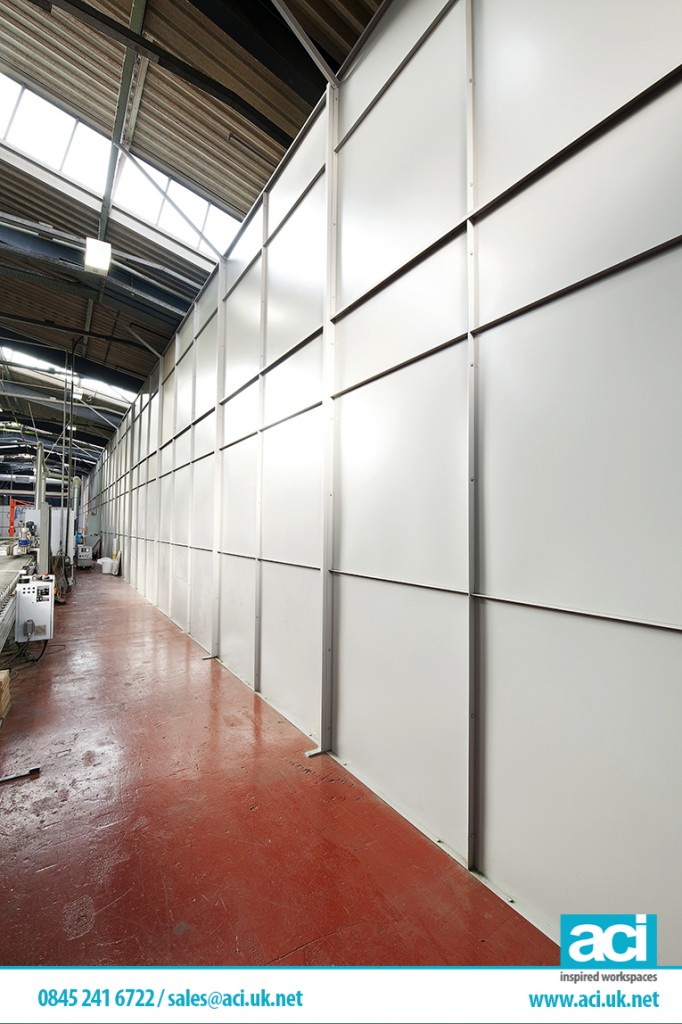
Occupied spaces are the obvious case. If people will work in or beside the partitioned area day in, day out, then appearance, warmth and noise control start to matter, and a double skin system earns its cost. The same is true wherever the environment itself is the point. Clean rooms, food and pharmaceutical areas, and temperature controlled zones need sealed, wipeable, well insulated construction that single skin is not designed to provide. When we built a partitioned clean room for a luxury pastry manufacturer, the project called for a powder coated double skin system with a solid steel walkable roof section, precisely because the hygiene and environmental requirements demanded it. You can read the full Marusu clean room project for a sense of when the higher specification is not a luxury but a necessity.
Acoustic separation, fire rating and long term staff comfort fall into the same bracket. Where any of these is a real requirement rather than a nice to have, the extra outlay buys something you will genuinely use every day, and that is money well spent. The skill is telling the difference, which is exactly the judgement our single skin vs double skin comparison is designed to help with.
The false economy that actually hurts
There are two ways to get the cost decision wrong, and only one of them is buying too cheap. The more common and more expensive mistake is over specifying. Businesses default to double skin everywhere because it feels safer, and end up paying a premium across an entire warehouse for thermal and acoustic performance that empty storage aisles will never benefit from. Multiply that across a large area and the wasted spend is significant.
The opposite error, under specifying where it matters, is real but rarer. Putting single skin around an occupied office or a clean room to save money creates a space that never performs and usually has to be redone. Both mistakes come from the same root cause, which is deciding on specification before thinking about use. The fix is simple. Start with what each area actually does, then choose the specification that suits it, area by area. There is no rule that a single project has to use one type throughout, and mixing single and double skin where each makes sense is often the most cost effective approach of all.
How to get an accurate quote and avoid overspending
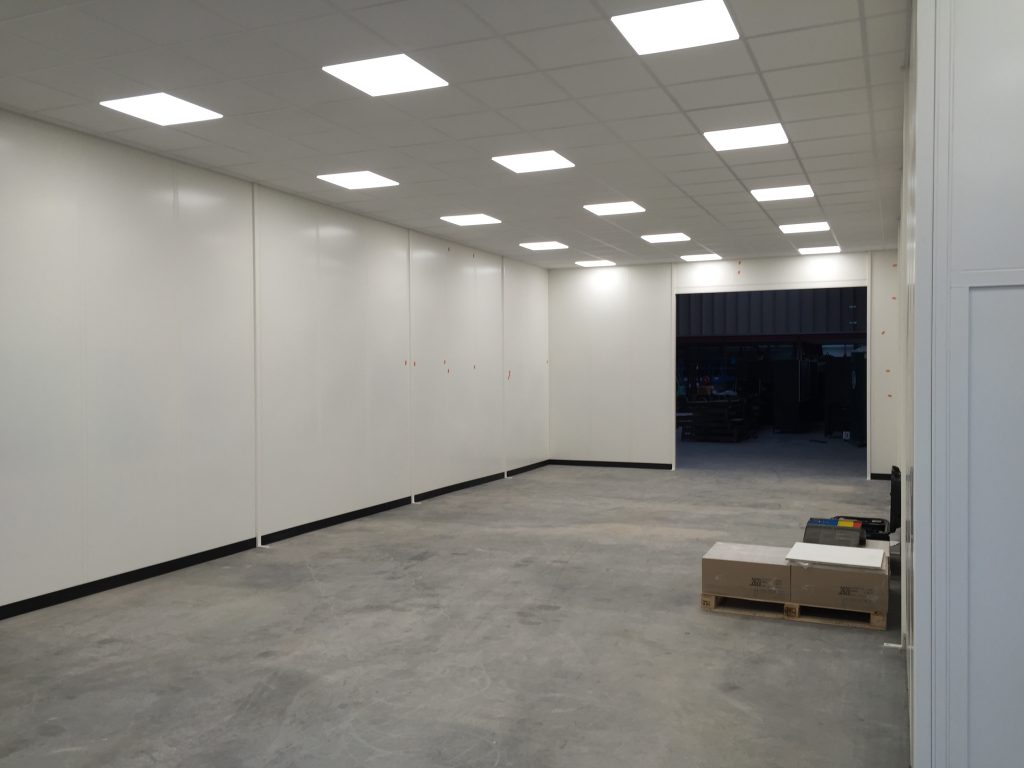
A good quote starts with a proper conversation about use, not a rushed measure and a single price. When you brief a supplier, tell them how each area will be used, whether anyone will occupy it, and whether temperature, noise, hygiene, fire or security are genuine requirements. That lets them specify each zone correctly rather than blanketing the whole job in the safest, dearest option.
It is also worth thinking about the future. If your layout is likely to change, a demountable system costs a little more now but can be moved and reused rather than written off, which often makes it the cheaper choice measured over several years. And because installation quality affects both safety and how long the system lasts, a proper design, supply and fit service from a specialist tends to protect the value of whatever you spend. The aim throughout is not to find the lowest number on a page but the lowest number that still does everything the space actually needs.
Frequently asked questions
Is single skin steel partitioning cheaper than double skin?
Yes. Single skin uses one steel face rather than two, so it needs less material and less labour, which makes it the more economical option. The saving is real, but the right comparison is always against what the space actually requires rather than against double skin in the abstract.
What affects the cost of steel partitioning the most?
The overall area and height come first, followed by the panel specification, then the extras such as doors, glazing, mesh, fire rating, temperature control and walkable roof sections. Site access and installation complexity also play a part. The single versus double skin choice matters, but it is rarely the only driver.
Is single skin lower quality than double skin?
No. It is a robust, powder coated steel system built to industrial standards. It simply omits the second skin and the thermal and acoustic benefits that come with it. For functional spaces that do not need those benefits, it is the correct choice rather than a lesser one.
Can I use single and double skin in the same project?
Absolutely, and it is often the smartest approach. Using double skin only where occupancy, hygiene, acoustics or temperature demand it, and single skin everywhere else, gives you the performance you need without paying a premium across areas that will never use it.
Getting the specification, and the cost, right
The cheaper option is the right one far more often than the instinct to spend more would suggest. For the working, functional spaces that make up most of any industrial site, single skin steel partitioning is not a compromise but the sensible specification, and paying for double skin there is simply money left on the floor. Save the higher specification for the places that genuinely earn it, and you get a building that performs everywhere and wastes nothing.
If you would like help specifying each area correctly and pricing it properly, the Industrial Partition Systems team can design, supply and fit a solution built around how you actually use your space. Take a look at our single skin steel partitioning options or call us on 0115 736 5986 to talk it through. We will help you spend on what matters and nothing else.